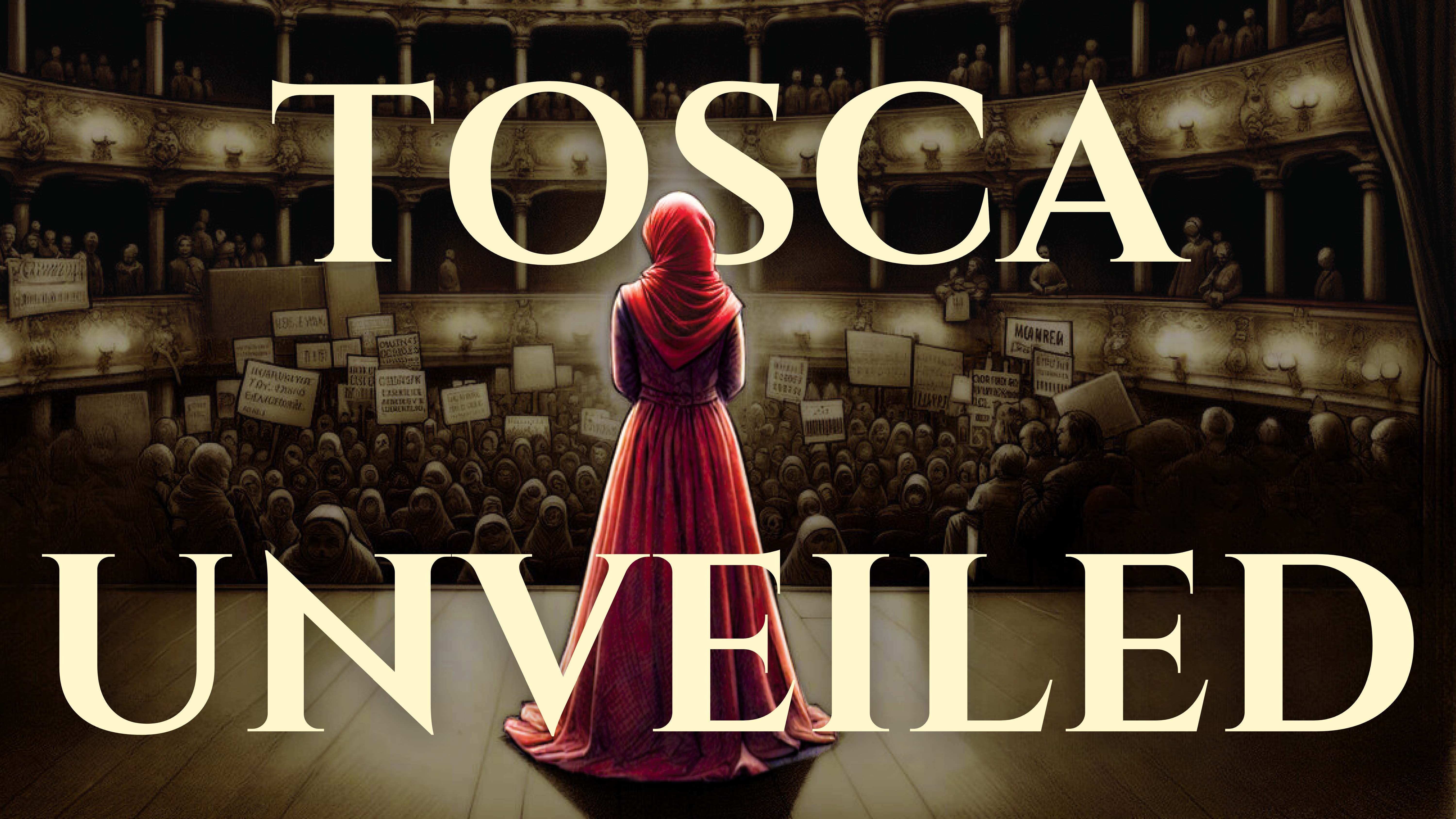
Tosca Unveiled
Written and Directed by Navid Negahban · WGA #2286697 · Buff Draft 05/13/2025 · 121 Pages · Farsi / German / English
Logline
When a Tehran theater troupe stages an uncensored Tosca as an act of defiance, the boundary between stage and reality dissolves as they discover they are the characters inside the tragedy written not by Puccini, but by the regime’s own enforcer.
Synopsis
The regime said yes to Tosca. On one condition: Tosca doesn’t kill Scarpia.
Director Vida Salehi agreed to every edit. Then spent six months rehearsing the real version in secret. Now it’s opening night at Tehran’s Vahdat Hall. International press. Foreign diplomats. A sold-out house. And walking through the lobby is the one man who could unravel everything: Akbar Askari, secret police, Ershad enforcer, and the man who left his marks on the body of Vida’s lead actress, Raha.
He isn’t here for the opera.
As the curtain rises, the company must hold together against their own fractures and a regime tightening around them in real time. Tosca’s story of tyranny, desire, and impossible sacrifice begins to mirror their night so precisely that the actors can no longer tell which script they’re following. Puccini’s, or the one being written for them in the dark.
Director’s Statement
Shadi Ghaheri is an Iranian, New York–based director who worked in Iran. She heard about a theater group in Mashhad — the city where I was born — who refused to perform at an international festival as retaliation against the regime for killing and imprisoning people in the streets. They were arrested. Their families were threatened. They were forced to perform. She wrote a play called Tosca Tehran and sent it to me. Because I am from Mashhad. Because she knew I would understand.
When I read it, I knew the stage couldn’t do it justice. This was too big for the theater. A story about art, tyranny, and what it costs to speak when silence is the price of survival. I bought the rights and wrote the screenplay. What I didn’t realize was that I wasn’t adapting someone else’s story. I was writing my own.
I have faced many Askaris in my life. Growing up in Iran, I was questioned, reprimanded, suspended from school for speaking up. Every time I defended another student against the Islamic moral student organization, I was punished. Not for what I said, but for the fact that I said anything at all. The characters in Tosca Unveiled are not abstractions to me. They are people I grew up with. People I trained with. People I may never see again.
When I was scouting locations in the Republic of Georgia, I found a theater I fell in love with. After the creative team read the script, they called me and said: “What you wrote is our story. One of our lead actors has been arrested for speaking against the government. We don’t know where he is.”
That is how Tosca connects Mashhad to Rome to Tbilisi. The uniforms change, but the gaze and the pressure remain dangerously current in each.
Tosca has been performed over one thousand times at the Metropolitan Opera alone, making it one of the most frequently staged operas in its 124-year history. Globally, it remains among the five most performed operas in the world. It has endured for more than a century because its subject is not historical. It is immediate. What happens when power desires not just your obedience, but your body, your art, your soul.
The Vision
I want this film to feel like one continuous journey. From the first frame to the last, the audience follows the actors through the theater: stage, backstage, green room, corridors. They cannot let go. One actor passes us to the next like a baton in a relay. By the end, everything feels like one unbroken shot. Not because it’s a technical stunt. Because there are no cuts in a crisis. There is no editing in fear.
On stage, the world is warm — the grandeur of Puccini’s Rome. Off stage, bare corridors, fluorescent light, a desert. The audience will feel the temperature change before they understand it. The Tosca sections will be performed in a Shakespearean Farsi, elevated and formal. The rest in modern Farsi, with German and English where the story demands it.
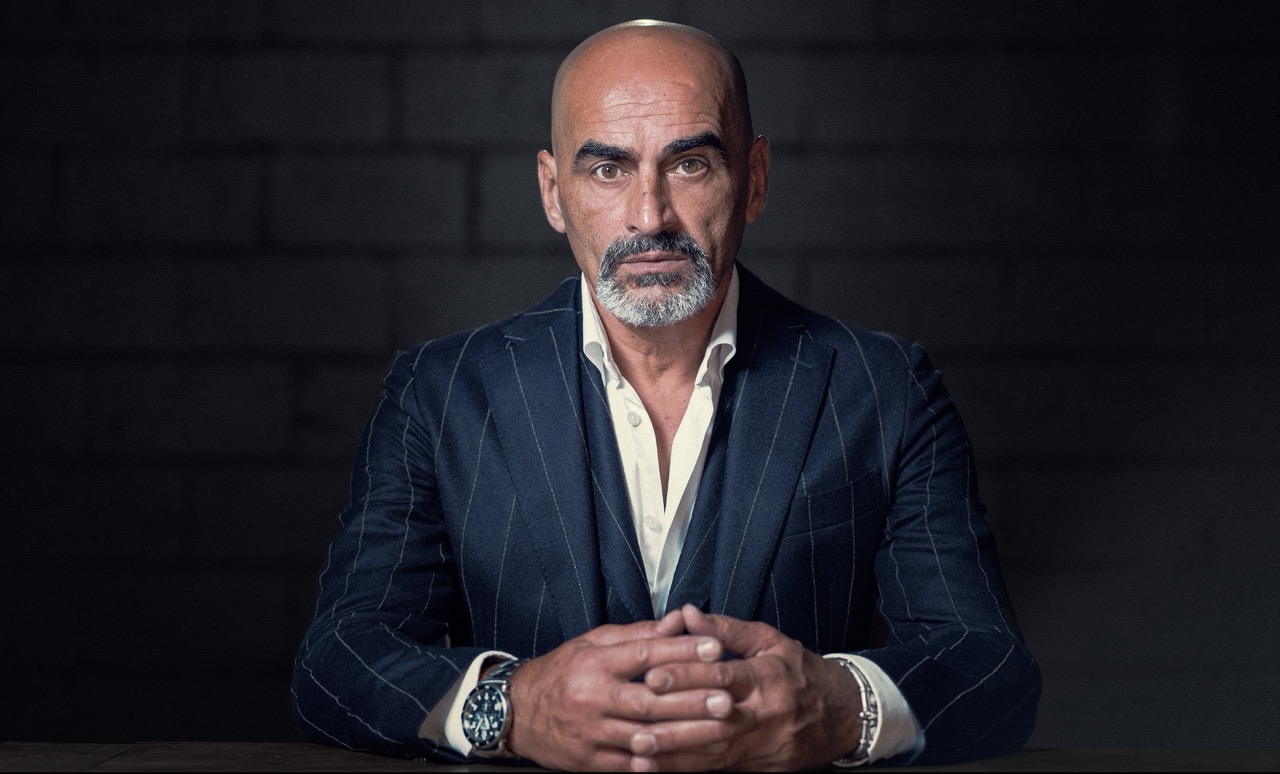
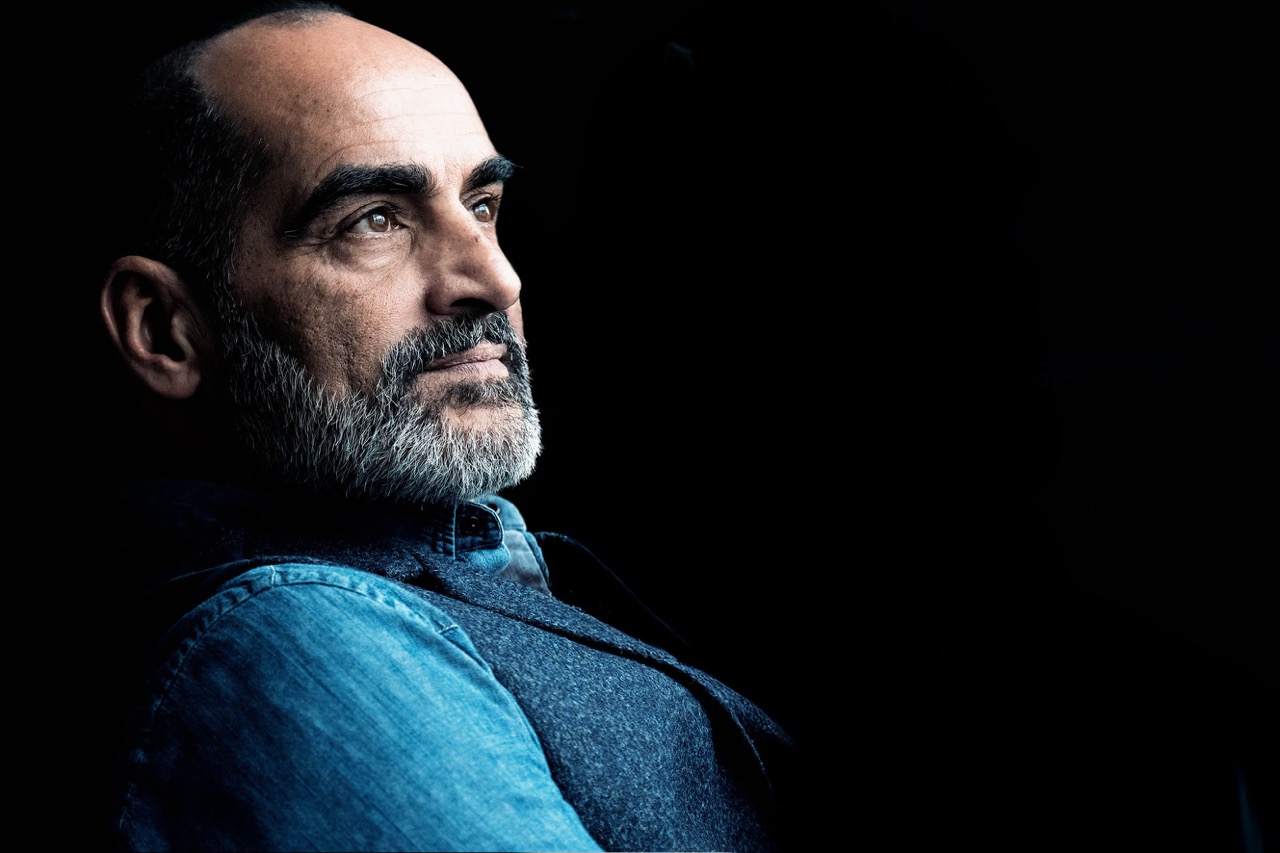
I have worked as an actor since 1987. Over 160 projects. I have been mentored by Jim Sheridan and Mike Nichols. After nearly four decades inside the craft, I know when an actor is performing and when they are being. That distinction is the entire point of this film.
I will play Askari not as a monster, but as proximity. The most frightening power is the one that stands close enough to whisper.
My plan is to rehearse the script the way you rehearse a play — not on a soundstage with marks and setups, but on the movie set itself, which is a theater. We use the entire space. We run the script from beginning to end with our director of photography attached, so that the DP lives inside the rhythm of the piece the way the actors do. Our dress rehearsal is the moment the DP tells us: I know where the cameras go.
Then we shoot. The cameras will be hidden from the actors and from the audience inside the film. The result should never look like you are watching a movie. It should feel like you are living it. I want my audience to think: Do I want to be here? What would I have done? Not a film you observe. A night you survive.
Mood
ON STAGE
Warm candlelight on stone. Voices filling a hall built for a thousand. The opera is beautiful and cruel. Power wears silk. Violence is orchestrated like music. Puccini’s Rome rendered in Shakespearean Farsi.
OFF STAGE
Cold. Bare. Fluorescent. Concrete corridors, loading docks, a green room that feels like a holding cell. The audience will feel the temperature change before they understand it. This is where Askari moves freely. The stage belongs to art. The corridors belong to power.
THE COLLAPSE
As the night progresses, the border between these two worlds dissolves. The warm stage and the cold backstage bleed into each other, until no one can tell which tragedy they are inside.